When Wisdom Teeth Removal in Oxnard CA Becomes Necessary
Wisdom teeth have a way of staying quiet for years, then suddenly becoming the problem that rearranges your week. One day you are chewing normally, maybe noticing a little pressure in the back of your jaw. A few days later, your gum is swollen, your bite feels off, and you are trying to decide whether this is something that will settle down or something that needs prompt treatment.
That uncertainty is common. Third molars, better known as wisdom teeth, often erupt later than the rest of the adult teeth, usually in the late teens or twenties. By the time they try to come in, many mouths simply do not have enough room. Some people keep all four wisdom teeth without much trouble. Others develop pain, infection, damage to neighboring teeth, or cysts that are only discovered on an X-ray. The difficult part is that the need for treatment is not always obvious from symptoms alone.
For patients considering Wisdom Teeth Removal Oxnard CA, the right decision usually comes down to a mix of anatomy, age, symptoms, and risk. Removal is not automatically necessary just because wisdom teeth exist. It becomes necessary when those teeth are creating active problems or have a strong likelihood of causing them in the near future.
Why wisdom teeth so often become a problem
The human jaw has changed over time, but wisdom teeth have not gotten the memo. Many adults do not have enough space behind the second molars to allow a third molar to come in upright and fully functional. When there is not enough room, a wisdom tooth may stay trapped under the gum or bone, emerge only partway, or push against the tooth in front of it.
A fully erupted wisdom tooth that is straight, easy to clean, and properly aligned can sometimes be left alone. In practice, that is less common than people expect. The back corners of the mouth are notoriously hard to brush and floss well. Even wisdom teeth that look fine at first may be difficult to maintain over the years. Decay and gum inflammation often develop there before the patient realizes anything is wrong.
Partially erupted wisdom teeth are especially troublesome. A flap of gum can sit over part of the crown, creating a warm, sheltered space where food particles and bacteria collect. That can lead to a painful infection called pericoronitis. Patients often describe it as tenderness in the very back of the mouth that flares when they chew, yawn, or swallow. Sometimes the pain radiates toward the ear or down the jaw, which makes the source less obvious.
Impacted wisdom teeth, those that remain trapped in the jaw or angled against another tooth, can create a different set of concerns. They may press on the second molar, contribute to bone loss in that area, or become associated with cyst formation. In many cases, patients have no idea any of this is happening until a panoramic X-ray reveals it during a routine exam.
The signs that removal may be necessary
Symptoms matter, but symptoms are only part of the picture. A patient with obvious pain may need removal soon, while another patient with no discomfort at all may still be a strong candidate because the tooth is in a risky position.
These are the situations that most often point toward removal being necessary:
- Recurrent pain, pressure, or swelling at the back of the mouth
- Repeated gum infections around a partially erupted wisdom tooth
- Decay in the wisdom tooth or the second molar next to it
- Evidence on X-rays that the tooth is impacted, damaging nearby structures, or unlikely to erupt properly
- Jaw stiffness, difficulty opening fully, or food trapping that cannot be managed effectively
That list covers the common patterns, but the real decision is more nuanced. A mild ache after eruption is not the same as a persistent infection. A deeply impacted tooth in a 19-year-old behaves differently than a similar tooth in a 42-year-old. The timing of treatment often matters nearly as much as the treatment itself.
Pain is not the only reason
One of the most persistent misconceptions is that wisdom teeth only need to be removed if they hurt. In day-to-day practice, that is not how these decisions usually work. Some wisdom teeth cause significant trouble before pain ever appears.
A classic example is decay on the back surface of the second molar. An angled wisdom tooth can trap plaque and debris against the tooth in front of it, and the patient may have no warning until a cavity or periodontal defect is found. By that point, the issue is no longer just about the wisdom tooth. It is about preserving a healthy molar that plays a much more important role in chewing for the rest of your life.
Another common scenario involves repeated inflammation around a partially erupted tooth. A patient may say, “It only bothers me every few months.” That pattern often sounds manageable at first, but recurring infections rarely improve permanently on their own. They tend to flare during stressful periods, when oral hygiene slips, or when the immune system is under strain. Waiting can turn an intermittent nuisance into a more painful, urgent problem.
There are also cases where the wisdom tooth is entirely under the gums and not causing symptoms, yet its position raises concern. A horizontal impaction pressing into the second molar is a good example. Leaving it in place may be reasonable in some patients, but not in all. The decision depends on the angle, depth, root development, age, and how close the tooth sits to nearby structures.
What X-rays often reveal that you cannot feel
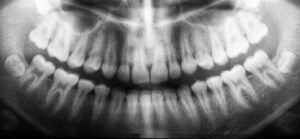
The back of the mouth is one of the least visible parts of dental anatomy, and wisdom teeth are often partly or fully hidden. That is why imaging matters so much. A panoramic X-ray gives a broad view of the upper and lower jaws, showing whether wisdom teeth are erupted, partially erupted, or impacted. It also helps identify their relationship to the adjacent teeth, the jawbone, and important nerves.
Patients are often surprised to learn that a wisdom tooth can be growing sideways, trapped under bone, or pressing on another tooth without causing immediate pain. That surprise is understandable. Teeth do not always announce a problem early. Some of the most straightforward surgical cases are found before symptoms start, while some of the more complicated cases come from years of delay after repeated warning signs.
Imaging also helps with risk planning. Lower wisdom teeth can lie near the inferior alveolar nerve, which supplies feeling to the lower lip and chin. Upper wisdom teeth can sit close to the sinus area. A careful review of imaging helps the surgeon explain the anatomy, assess the complexity of the extraction, and discuss realistic recovery expectations.
Age changes the equation
There is a reason many oral surgeons prefer to evaluate wisdom teeth in the late teen years or early twenties. Younger patients generally heal faster, and the roots of the wisdom teeth may not be fully developed yet. Bone is often less dense as well, which can make removal more straightforward.
That does not mean older adults should avoid treatment. Plenty of people have wisdom teeth removed in their thirties, forties, or later. It does mean the discussion may be different. With age, roots can become longer or more curved, the bone can become denser, and the risk of slower healing may rise. If a wisdom tooth starts causing infections, damages a neighboring tooth, or develops decay later in life, removal may still be the best option. The point is not that there is a perfect age, but that earlier evaluation often gives patients more choices.
A pattern I have seen many times is the patient who was told years ago to “watch” a wisdom tooth that seemed quiet. For a while, that advice made sense. Then life got busy, routine exams became less consistent, and the tooth changed. By the time the patient returned, the second molar had developed a deep cavity or periodontal defect that might have been prevented with earlier intervention. Monitoring can be appropriate, but it only works if the monitoring actually happens.
When waiting is reasonable
Not every wisdom tooth needs to come out, and saying that plainly matters. There are patients whose wisdom teeth erupt normally, align well, do not trap food, and remain easy to clean. Others have impacted wisdom teeth that appear stable for years and show no sign of harming nearby structures. In those cases, observation may be the most sensible approach.
The key word is observation, not neglect. If a wisdom tooth is kept, it should still be examined regularly. X-rays at appropriate intervals can detect changes before they become major problems. Gum health around the area should be checked, and the patient should be honest about whether that far-back tooth is truly being cleaned effectively.
Keeping wisdom teeth can be reasonable when the benefits of avoiding surgery outweigh the risks of leaving them in place. That balance is individual. It depends on current health, anatomy, age, oral hygiene, and access to follow-up care.
Situations that call for prompt attention
There are moments when it makes little sense to keep waiting. If a patient develops facial swelling, severe pain, pus drainage, fever, trouble swallowing, or difficulty opening the mouth, the issue has moved beyond a routine annoyance. Those symptoms suggest active infection or significant inflammation, and they deserve prompt professional evaluation.
A milder but still important category includes repeated episodes of soreness behind the last molar, bad taste from the area, bleeding gums, or food repeatedly getting stuck under a gum flap. These are signs that the tooth is not functioning harmoniously in the mouth and that home care alone may not solve the problem.
If you are trying to judge whether a wisdom tooth issue is likely to settle or likely to persist, this quick checklist is useful:
- Symptoms that return again and again usually point to an underlying structural problem
- Pain with swelling tends to be more significant than pressure alone
- Difficulty cleaning the area often predicts future decay or gum trouble
- Damage to the second molar raises the stakes considerably
- Sudden worsening, fever, or facial swelling should not be brushed off
That kind of practical judgment matters, especially for patients deciding whether to schedule an evaluation for Wisdom Teeth Removal Oxnard CA before a manageable issue becomes an urgent one.
The Oxnard factor, lifestyle and timing matter
In a coastal community like Oxnard, lifestyle often shapes when people finally address wisdom teeth. Students https://anotepad.com/notes/8tg2qagw try to fit surgery between semesters. Working adults hold off until they can coordinate time away from physically demanding jobs. Parents often delay their own treatment while arranging care for their teenagers first. I have seen all of these scenarios play out.
This matters because wisdom tooth problems rarely appear at convenient times. A partially erupted lower wisdom tooth can stay quiet for months, then flare before a trip, during finals, or right ahead of a major work deadline. Planning ahead is often easier than responding in crisis mode. If an exam and imaging suggest that removal is likely needed, it is usually better to choose the timing deliberately rather than wait for the tooth to choose it for you.
For athletes and people with active schedules, recovery timing matters too. Most patients want to know how quickly they can get back to normal. The honest answer is that it depends on the complexity of the extraction, the number of teeth removed, and the individual’s healing response. Many people are functional within a few days, but swelling and soreness can linger longer, especially after more involved lower wisdom tooth surgery.
What the evaluation usually covers
A proper wisdom tooth consultation is more than a quick glance into the mouth. The clinician will look at symptoms, medical history, medications, oral hygiene, jaw opening, gum condition, and imaging. They will also consider whether the problem tooth is fully erupted, partially erupted, or impacted.
The discussion should cover practical details, not just whether the tooth can be removed. Patients deserve to understand why removal is recommended now rather than later, what the procedure is likely to involve, what kind of anesthesia or sedation may be appropriate, and what the recovery may realistically look like.
Good clinical judgment also means recognizing edge cases. A patient on certain medications, a patient with complex medical conditions, or a patient with unusual root anatomy may need a more tailored plan. That is one reason cookie-cutter advice about wisdom teeth is often misleading. The anatomy may look simple on the surface, but the details drive the decision.
What recovery tends to feel like
People are often more anxious about recovery than about the procedure itself. Some of that anxiety comes from stories that mix common discomfort with uncommon complications. In reality, most recoveries are manageable, but they are not identical.
After removal, soreness, swelling, and limited jaw opening are all common for the first several days. The lower teeth usually cause more postoperative discomfort than the upper teeth. Soft foods, careful hydration, and avoiding suction activities such as vigorous straw use are standard parts of recovery advice because they help protect the healing blood clot in the extraction site.
A smooth recovery often comes down to simple discipline. Rest when your body is clearly asking for it. Take medications exactly as directed. Keep the mouth clean in the way your surgeon recommends, but do not overdo rinsing in the earliest phase. Patients who try to “test” the area with crunchy foods too soon often discover that healing tissues are less forgiving than they hoped.
There is also a practical point many people appreciate hearing: if all four wisdom teeth are likely to need removal, doing them together is often more efficient than spacing them out and repeating the recovery process multiple times. That is not right for every patient, but it is a common and reasonable choice.
Questions worth asking before moving forward
Patients make better decisions when they ask direct questions. You do not need a long checklist, but you do need clarity. Ask what problem the wisdom tooth is causing now, what risk it poses if left in place, and whether the recommendation is urgent or elective. Ask how difficult the extraction appears based on the imaging. Ask what your first three days after surgery are likely to feel like, not just what the ideal recovery looks like.
If the tooth is not causing active trouble, it is fair to ask what the threshold would be for removing it later. A thoughtful answer should explain what changes on the X-ray, what symptoms would matter, and how age may affect the decision over time. That kind of discussion helps patients move away from vague worry and toward an informed plan.
The bigger goal is protecting long-term oral health
It is easy to frame wisdom teeth as a short-term issue because they often enter the conversation during a painful episode. The more useful way to think about them is in terms of long-term oral health. A troublesome wisdom tooth does not exist in isolation. It can affect the gum tissue behind the second molar, create an area that traps bacteria, or threaten a neighboring tooth that is far more valuable in daily function.
That is why removal becomes necessary in many cases. Not because wisdom teeth are inherently bad, and not because every patient should have them taken out automatically, but because the cost of keeping a problem tooth can quietly spread to the rest of the mouth. When a wisdom tooth is repeatedly inflamed, difficult to clean, structurally trapped, or already damaging adjacent teeth, the argument for removal becomes strong.
For anyone weighing Wisdom Teeth Removal Oxnard CA, the most sensible next step is not guessing based on symptoms alone. It is getting a proper evaluation, including imaging when needed, and discussing the specific anatomy and risks in your own mouth. That conversation usually makes the path clearer. Some patients learn they can monitor safely. Others learn that what feels like a minor irritation is actually a sign of a tooth that has very little chance of behaving well over time.
The necessary decision is rarely about fear or urgency for its own sake. It is about timing, prevention, and protecting the teeth and tissues you want to keep healthy for decades.
Oxnard Dentistry
1730 E Gonzales Rd
Oxnard, CA 93036, United States
Phone: +1 805-307-8731
FAQ About Wisdom Teeth Removal Oxnard CA
How much does it cost to get wisdom teeth removed in California?
Fees depend on tooth position, the number of extractions, imaging and anesthesia. Oxnard Dentistry can provide an individual estimate after examining your teeth. Ask for an itemized plan and confirm insurance benefits before scheduling.
Will insurance cover wisdom teeth removal?
Coverage and out-of-pocket costs vary by policy and the treatment required. Ask the dental office and your insurer to verify benefits, annual limits and any authorization requirements. A benefit estimate does not guarantee payment.
Is 30 too old to have wisdom teeth removed?
Age alone does not determine whether extraction is appropriate. A dentist evaluates symptoms, tooth position, oral health and medical history. Healthy, functional wisdom teeth may be monitored; teeth causing disease or other problems may need treatment.